
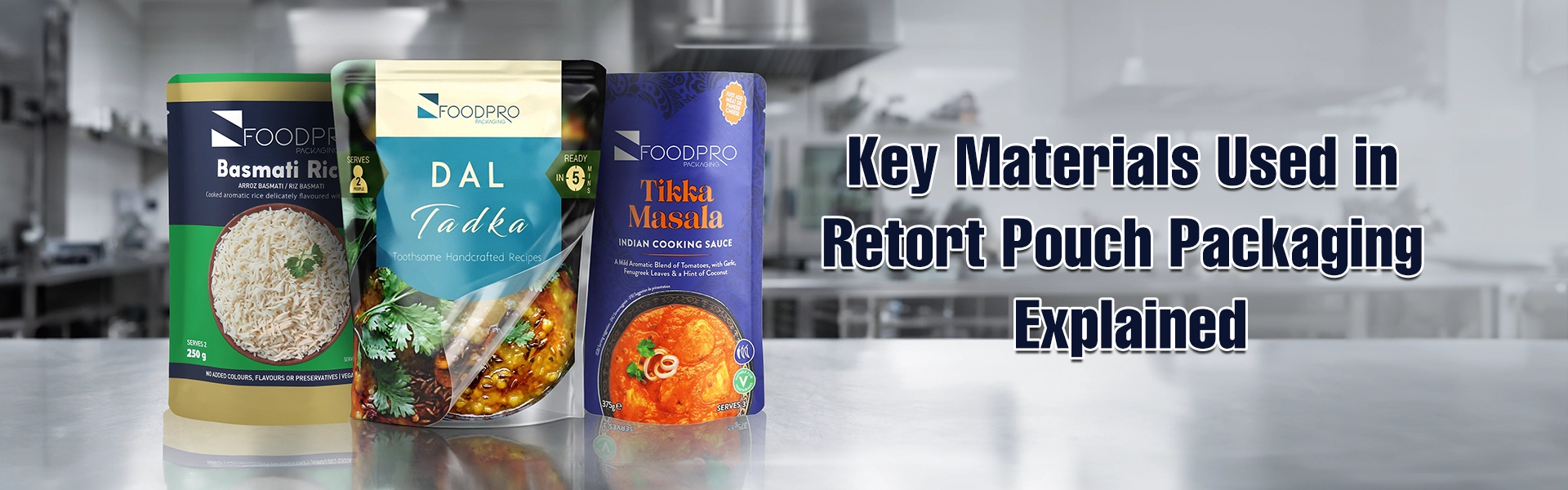
Retort pouch packaging has transformed the way ready-to-eat and ready-to-cook foods are stored, transported and consumed. From curries and gravies to soups and pet food, retort pouches offer long shelf life without preservatives while maintaining food safety and taste.
At FoodPro Packaging, we believe that the strength of retort packaging lies in the materials used. Each layer plays a critical role in protecting food during high-temperature processing and long storage periods. Let us break down the key materials used in retort pouch packaging in a simple and clear way.
What Is Retort Pouch Packaging?
A retort pouch is a multi-layer flexible package designed to withstand high heat and pressure during thermal sterilization (retorting). This process kills harmful bacteria and makes food shelf-stable for months or even years.
To perform under such extreme conditions, retort pouches use carefully selected materials, each with a specific function.
Key Materials Used in Retort Pouch Packaging
1. Polyester (PET) – The Outer Layer
Polyester, commonly known as PET, is used as the outer layer of retort pouches.
Why PET is important:
- Provides strength and durability
- Offers excellent print quality for branding
- Resists heat during the retort process
PET protects the pouch from external damage and gives it a professional, premium appearance on store shelves.
2. Aluminium Foil – The Barrier Layer
Aluminium foil is one of the most critical materials in retort packaging.
Key benefits of aluminium foil:
- Acts as a strong barrier against oxygen, moisture and light
- Prevents spoilage and loss of flavour
- Extends shelf life significantly
This layer ensures that food remains fresh, safe and uncontaminated even without refrigeration.
3. Nylon (PA) – The Strength Layer
Nylon, also called Polyamide (PA), adds extra toughness to retort pouches.
Why nylon is used:
- Enhances puncture resistance
- Withstands pressure during thermal processing
- Maintains pouch shape after retorting
This layer is especially important for products with sharp ingredients or rough handling during transportation.
4. Cast Polypropylene (CPP) – The Food Contact Layer
The inner layer of a retort pouch is usually made of CPP, which comes in direct contact with food.
Advantages of CPP:
- Safe for food contact
- Provides strong heat-sealing properties
- Resists high temperatures and oil content
CPP ensures leak-proof sealing and keeps the food intact throughout its shelf life.
Why Multi-Layer Structures Matter in Retort Packaging
No single material can perform all functions required in retort packaging. That is why multi-layer laminates are used. Each layer works together to provide:
- Thermal resistance
- High barrier protection
- Mechanical strength
- Food safety compliance
At FoodPro Packaging, we design retort pouch structures that meet global food safety standards while delivering consistent performance.
Choosing the Right Retort Packaging Materials
Selecting the right materials depends on:
- Type of food (liquid, solid, oily, acidic)
- Shelf-life requirements
- Export and regulatory needs
- Storage and transportation conditions
With over extensive experience in retort pouch manufacturing, FoodPro Packaging offers customized material structures to match specific product requirements.
Final Thoughts
The success of retort pouch packaging depends heavily on the quality and compatibility of materials used. From PET and aluminium foil to nylon and CPP, every layer has a purpose.
At FoodPro Packaging, we are committed to delivering high-quality retort pouches that ensure food safety, freshness and reliability—every single time.
If you are looking for trusted retort packaging solutions, FoodPro Packaging is your partner in quality and innovation.